Pocket costs $60 less than Plaud Note Pro, and its free plan does not cap standard transcription. On price alone, Pocket wins.
The extra $60 gets you automatic switching between calls and room recording, 22g less weight, and a better-documented case for recording quality. Pocket makes you move a slider yourself. Whether that is worth it depends on how often you record calls and how likely you are to forget the switch.
My take: buy Pocket if price and transcription volume matter most. Buy Plaud if recording quality, lighter hardware, and automatic mode switching matter more. Plaud has done more to prove its recording quality. Nobody has published a controlled Pocket versus Plaud test.
Before we get into it: I build Fieldy, which competes with both products. I have not tested them side by side. This comparison uses current documentation, terms, and owner feedback, checked July 21, 2026.
I compare Pocket with Plaud Note Pro because it is Plaud’s current card-style phone-call recorder and the closest match. The original Plaud Note is the older card model. NotePin is wearable, but it cannot record phone calls.
Pocket AI vs Plaud at a glance
| What you care about | Pocket AI | Plaud Note Pro |
|---|---|---|
| Device price | $129 | $189 |
| Free transcription | Unlimited, standard accuracy | 300 minutes/month |
| Phone calls | Yes; select call mode | Yes; automatic mode switching |
| Weight | 52g | About 30g |
| Battery claim | 4 days of active use | 30 hours Enhance / 50 hours Endurance |
| On-device storage | 64GB | 64GB |
| Languages | 120+ | 112+ |
| Apps | iOS, Android, web; Mac/Windows beta | iOS, Android, web, desktop |
| Returns | 30 days; return shipping usually paid by buyer | 30-day free returns |
The $60 question
Pocket costs $129. Plaud Note Pro costs $189. If you plan to stay on the free plan, the comparison really is that simple: you spend $60 less upfront and get more free transcription.
At two hours of recording per workday, Plaud’s free 300 minutes run out halfway through the third day. Pocket does not meter standard-accuracy transcription.
Paid plans flip the price advantage. Pocket puts automatic speaker names, its highest-accuracy transcription, advanced AI models, full exports, and unlimited history behind Pocket Pro. Plaud’s paid plans primarily raise the transcription limit.
| First-year scenario | Pocket AI | Plaud Note Pro |
|---|---|---|
| Buy the device and use the free plan | $129 | $189 |
| Add the cheapest annual paid plan | $328 total | About $289 total |
| Unlimited transcription | $129 at standard accuracy | About $429 with Plaud Unlimited |
Stay on the free plan and Pocket wins on price. Pay annually for both apps and Plaud is about $39 cheaper in year one.
One warning: Pocket says the first 30 days of Pocket Pro are free after delivery and then cost $19.99 per month. Pocket’s Terms of Sale say trials convert to paid unless canceled, and returning the hardware does not cancel the subscription. Cancel Pro separately if you do not want it.
Returns differ too. Pocket’s terms require an RMA and generally leave return shipping to the buyer. Plaud advertises free 30-day returns, including return shipping. Keep the packaging until you know the recorder works for you.
The daily-use difference: one slider
Plaud removes one small annoyance
Both record normal conversations and phone calls without using speakerphone. Pocket has a contact microphone and a physical control for choosing the recording mode. Plaud Note Pro detects whether it is handling a call or a room conversation and changes modes automatically.
The switch itself is fine. Forgetting it before an important call is not. That is where Plaud’s automatic switching earns its extra cost.
Whichever device you choose, tell people you are recording and follow the consent laws where the conversation takes place.
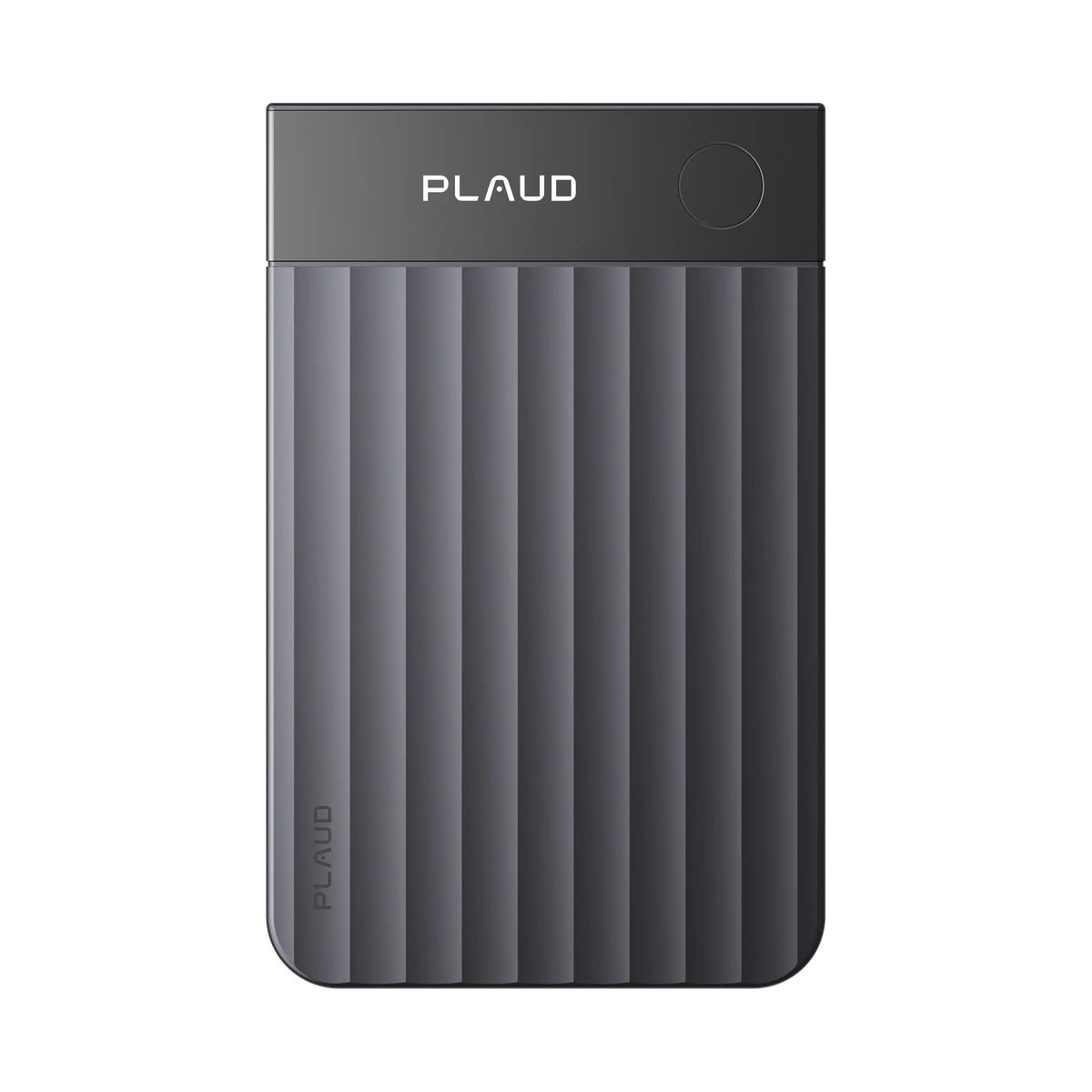
Pocket is noticeably heavier
Pocket weighs 52g. Plaud Note Pro weighs about 30g. Both attach to the back of a phone, but Pocket adds another 22g.
You probably will not care about 22g in a bag. You may care while holding your phone through a long call.
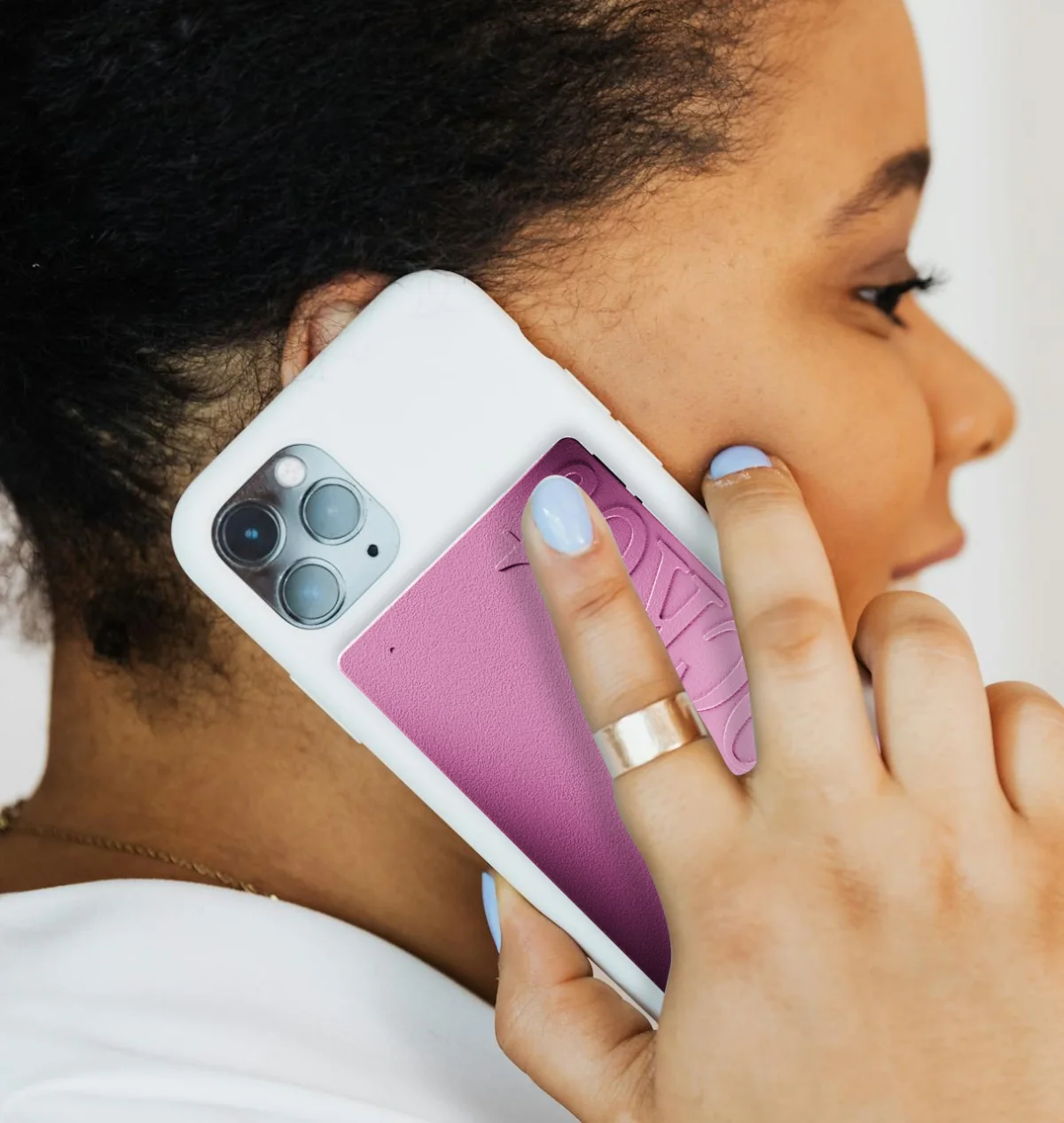
The battery numbers do not settle it
Pocket claims four days of active use. Plaud claims up to 30 hours in Enhance mode or 50 hours in Endurance mode. Those numbers are not comparable. Pocket reports days of active use; Plaud reports continuous recording under named modes. Without the same test schedule, there is no honest battery winner.
What “free transcription” actually means
Pocket’s free plan is unusually generous, but “free” does not mean “everything.” You get unlimited standard-accuracy transcription, summaries, tasks, mind maps, and plain-text exports. You do not get automatic speaker names, the highest-accuracy mode, advanced model selection, every export format, or unlimited history.
Plaud’s free plan includes 300 minutes each month. That is enough for occasional calls. It is not much for someone recording several meetings a day. Plaud Pro raises the allowance to 1,200 minutes per month; Plaud Unlimited allows up to 24 hours of transcription per day.
You can use either without paying monthly. Plaud’s upgrade mostly buys more minutes; Pocket Pro buys accuracy, speaker names, exports, and history.
Which one has better recording quality?
Plaud is the safer bet.
Plaud publishes results from its own anechoic chamber. It played the same speech to Plaud Note Pro and an iPhone 17 Pro Max at one and three meters, across quiet, moderate, and loud conditions. Plaud says Note Pro produced a lower word error rate in every tested condition. Its hardware also has four MEMS microphones and one voice pickup unit. Pocket lists two studio microphones and one contact microphone, but does not publish an equivalent controlled test.
This is better evidence than Pocket provides. Plaud still ran the test, and Pocket was not included. It does not show whether Plaud beats Pocket on the same recording.
If I had to choose for a noisy room, I would buy Plaud.
If accuracy matters most, test the recorder in your worst room, language, and call setup before the return window closes.
Is Pocket AI legit?
Yes. Pocket ships hardware and has public documentation, apps for the major platforms, a user community, a one-year warranty, and a 30-day return policy. Its Trustpilot profile showed 4.7 out of 5 from more than 2,000 reviews when I checked. Pocket invites reviews, and Trustpilot does not fact-check each review. Treat the score as owner sentiment, not a product test.
It is also the newer bet. Plaud currently sells several recorder models; Pocket sells one. Check recent delivery reports, return conditions, and feedback from owners using the same phone and language as you.
So, which one should you buy?
Buy Pocket AI if:
- You want to keep the hardware under $150.
- You record enough that Plaud’s five free hours would disappear quickly.
- Standard transcription and basic exports cover what you need.
- You do not mind choosing the recording mode yourself.
Buy Plaud Note Pro if:
- Phone calls are the main reason you want a recorder.
- You would rather pay more than remember to change modes.
- You care about the lighter phone attachment.
- Free return shipping matters to you.
Buy neither if:
- You want something worn as a pendant or watch through the day.
- You expect a card recorder to capture every spontaneous conversation automatically.
- You need proven accuracy in a specialist environment but cannot test before the return window closes.
For developers
Most buyers can skip this. Pocket documents an API, webhooks, and MCP. Plaud offers personal MCP and CLI access; its separate Embedded beta is for developers building Plaud hardware into other products.
If automation matters, verify the exact trigger or export before buying. The phrase “has an API” tells you almost nothing.
FAQ
Is Pocket AI better than Plaud?
Pocket AI is the better deal if price and transcription volume matter most. Plaud Note Pro is easier to recommend for frequent phone calls because it switches modes automatically and weighs 22g less.
Does Pocket AI require a subscription?
No. Pocket's free plan includes unlimited standard-accuracy transcription, summaries, tasks, mind maps, and plain-text exports. Check whether checkout starts a Pocket Pro trial, because it renews unless canceled.
How much does Pocket AI cost?
Pocket costs $129. Pocket Pro costs $19.99 monthly or $199 per year. Check whether checkout starts a free Pro trial: Pocket's terms say trials renew unless canceled, and returning the hardware does not cancel the subscription.
Can Pocket AI and Plaud record phone calls?
Yes. Both use contact or vibration-based microphones to capture a phone call without putting it on speaker. Pocket asks you to select the recording mode with a slider; Plaud Note Pro switches modes automatically. Tell participants and follow the recording-consent laws where you live.
Which has better transcription accuracy, Pocket or Plaud?
Plaud gets the edge. It publishes controlled acoustic-chamber results for Note Pro, while Pocket does not publish an equivalent test. Plaud ran the study and did not include Pocket, so this is not a head-to-head result.
Is Pocket AI legitimate?
Pocket is a real, actively sold recorder with public documentation, apps, a user community, a one-year warranty, and a 30-day return policy. It is still the newer product with one hardware model, so check current delivery estimates and recent owner feedback before ordering.
What about Pocket AI vs Plaud Note or NotePin?
This guide uses Plaud Note Pro because it is Plaud's current card-style phone-call recorder and the closest Pocket competitor. The original Plaud Note is the older card model. NotePin is the wearable option and is not designed for recording phone calls.
Sources checked
Sources, prices, and policies were checked on July 21, 2026.
- Pocket product and pricing
- Pocket documentation
- Pocket community
- Pocket reviews on Trustpilot
- Plaud Note Pro
- Plaud AI plan pricing
- Plaud anechoic-chamber test
- Plaud Note Pro microphone layout
- Plaud developer documentation
AI recorders change fast
I track price and plan changes. Get the next comparison by email.